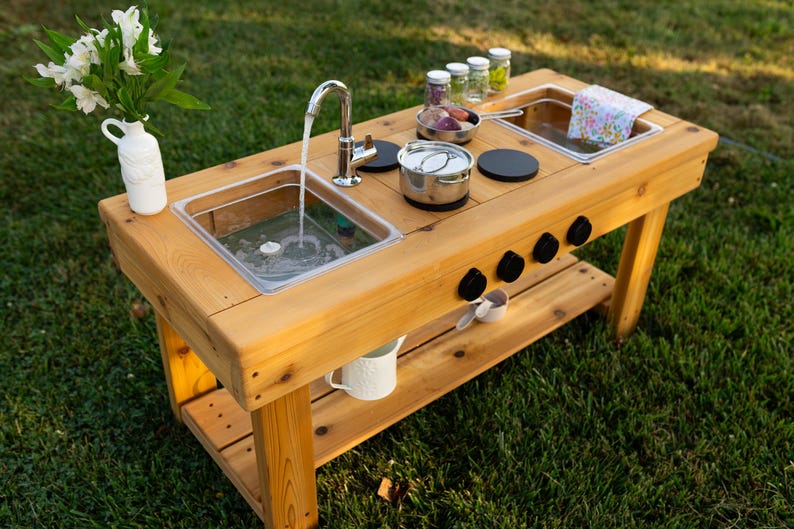
Picture the dinner rush: one parent rinses lettuce, another hunts for a missing lunchbox lid, and the kids want to help right now. A mini kitchen gives that big energy a safe place to land. It invites children to chop pretend carrots, wash toy cups, stir imaginary soup, and copy the everyday rhythms they see at home without crowding the real stove or grabbing heavy pans. For many families, this small play setup does more than fill a corner. It supports imaginative play, encourages independence, keeps toys more contained, and gives parents a few calmer minutes during snack time, laundry folding, or the classic “where are the shoes?” scramble…
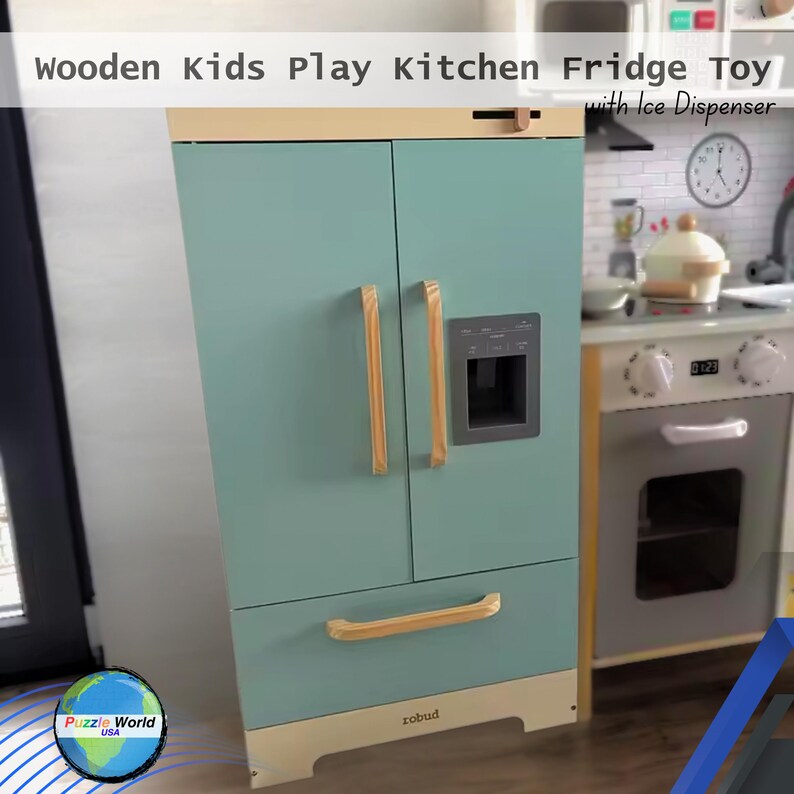
Why a Mini Kitchen Gives Kids Safer Autonomy at Home
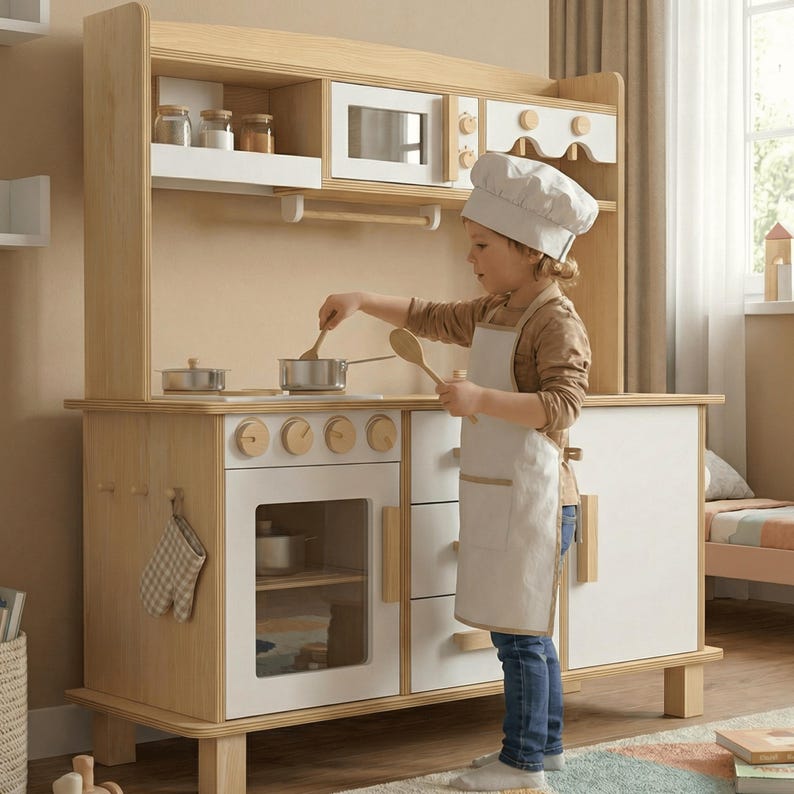
A real kitchen fascinates children because it has movement, smells, water, buttons, shiny tools, and grown up importance. That curiosity is sweet, but it can also feel nerve wracking when a toddler reaches toward a hot burner or opens a drawer full of sharp utensils. A mini kitchen offers a safer practice zone where kids can copy food prep routines with tools sized for small hands.
Safety matters most when children want to “do it myself.” In a dedicated play cooking area, they can pour wooden peas into a bowl, twist chunky knobs, stack cups, and wipe a tiny counter without standing on a chair near boiling pasta. Parents still supervise, of course, but supervision feels easier when the activity stays in one visible place instead of spreading across the main cooking area.
Child sized tools make independence feel realistic
Autonomy grows through repeated little actions. A child who can open a small cabinet, choose a pretend spoon, and place a plate on a low shelf gets a clear job with a visible result. That matters during the preschool years, when kids often crave responsibility but still need boundaries that protect them from adult hazards.
Think about a child named Maya, age four, who wants to help with Saturday pancakes. Her parent gives her a bowl of banana slices at the family table, then points her to the play stove where she can “cook” her own batch. She stays involved in the family ritual, hears words like mix, pour, warm, and clean, and avoids the crowded stovetop. That is a parenting win.
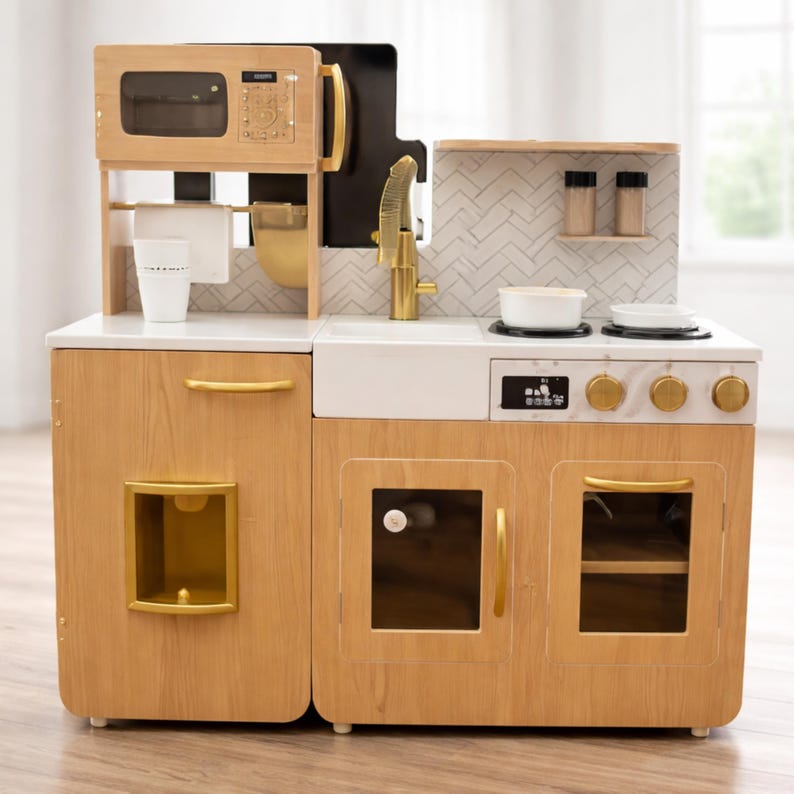
Good placement adds another layer of comfort. A compact unit near the dining area or living room lets adults glance over while prepping real food, answering messages, or packing tomorrow’s backpack. For small homes, a narrow setup under 24 inches wide and less than 14 inches deep can still hold a sink, two burners, and a crate for play food.
Lighting and materials deserve attention too. Warm light around 2700 to 3000K feels cozy without looking harsh, while rounded corners and wall anchors reduce bumps and tipping risks. The best setup gives kids freedom inside clear limits, and that is where confident home activities start.
How a Mini Kitchen Supports Child Development, Motor Skills, and Learning
Play cooking looks simple from the sofa, but little hands work hard during every pretend meal. Kids pinch felt strawberries, scoop wooden pasta, twist knobs, line up cups, and carry plates from counter to table. Those tiny movements support motor skills and hand eye coordination in a way that feels natural, playful, and wonderfully low pressure.
There is a reason many parents notice longer focus around toy kitchens than around flashier toys. The activity has a familiar script, yet every session can change. One day the menu says soup and crackers, the next day a child announces “dragon noodles” for a stuffed animal birthday. Creativity gets plenty of room because children choose the story, the ingredients, the voices, and the rules.
Food play teaches real world habits without a lecture
A pretend cooking corner gives parents an easy path into early nutrition and hygiene talk. A child can sort green foods from yellow foods, pretend to wash berries, place plates in a “clean” stack, and learn that raw chicken needs careful handling even if the chicken is made of wood. The lesson stays light, which helps kids listen.
Some families use picture labels on bins so pre readers can match carrots to the vegetable basket and cups to the dish shelf. That simple system supports early learning, tidying, and independence at once. It also reduces the end of day toy explosion, which every parent recognizes after a long afternoon.
Color and sound can shape how long children stay engaged. Soft greens, butter yellow, warm gray, and dusty blue often feel calmer than bright red surfaces everywhere. A woven rug under the play area softens clattering pans, and a cork board behind the unit can quiet the sharp tap of spoons against walls.
Research informed design guidance, including WELL v2 recommendations on lighting and low VOC materials, points parents toward safer, more comfortable spaces. Steelcase education research has also connected tidy, right sized zones with smoother focus and fewer stressful transitions in group environments. At home, that can look like one small counter, one shelf at shoulder height, and one clear place to put the pretend muffins.
Role play also builds language. A child asks, “Would you like soup?” then waits for an answer, changes the order, names a color, or explains why the oven is “too spicy.” Funny? Absolutely. Useful? Very.
Mini Kitchen Role Play Helps Kids Share, Talk, and Practice Patience
A play cooking area often attracts siblings, cousins, neighbors, and visiting grandparents. That makes it a strong tool for social growth, not just a cute toy. Kids negotiate who gets the spatula, who writes the menu, who delivers the pizza, and who has to wait because the pretend oven timer has not beeped yet.
Those moments may sound tiny, but parents see the big feelings hiding inside them. One child wants control. Another wants a turn. Someone says the soup needs seven blueberries and a sock, which somehow sparks a debate. In that back and forth, children practice sharing, listening, problem solving, and patience without sitting through a formal lesson.
Family connection can happen in five playful minutes
Parents do not need an elaborate plan. Sitting near the play counter and saying, “What is on the menu today?” can open a whole scene. A child might hand over a wooden lemon and whisper, “This is the secret sauce.” That kind of role play gives families easy conversation during tired parts of the day.
For siblings, the kitchen can support cooperative play because it gives each child a job. One washes dishes, one runs the cafe, one feeds the stuffed dog. The jobs can change quickly, and that flexibility helps reduce arguments when adults guide the first few minutes with calm prompts.
Grandparents often love this setup too. They can join from a chair, request tea, tell a child how they made soup growing up, or teach polite phrases like please, thank you, and would you like more. A small toy kitchen can hold a surprising amount of family storytelling.
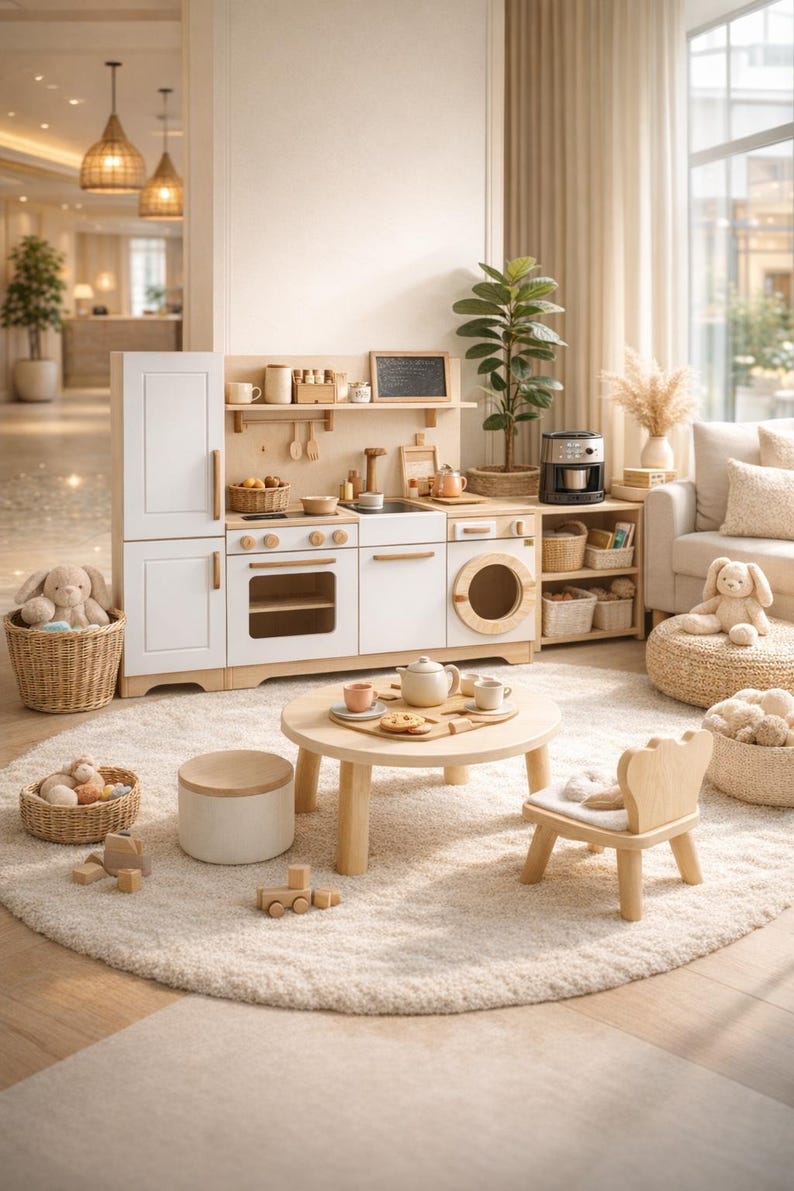
The social value grows when the space looks organized. A chalk menu beside the unit invites kids to plan before they rush into cooking. A small basket for plates and another for food keeps the scene readable, especially for toddlers who get overwhelmed when everything lands on the floor.
Parents can also use the setup during playdates. Instead of handing out several unrelated toys, they can offer a shared scenario: restaurant lunch, birthday cupcakes, grocery pickup, or breakfast for stuffed animals. Children get a common script, then add their own silly details. Less wandering. More connection.
Why a Mini Kitchen Keeps the Family Home More Organized and Peaceful
Parents with limited square footage often worry that one more toy will swallow the room. The right pretend kitchen can do the opposite. A compact model gives play food, dishes, utensils, recipe cards, and little aprons one home, instead of letting them scatter across the couch, hallway, and under the dining table.
Space saving design matters here. Wall hugging units, corner layouts, fold down prep fronts, and toddler height islands can fit into living rooms, bedrooms, or play corners without taking over the whole floor plan. A clear path of about 24 to 30 inches around the setup helps kids move safely while adults pass with laundry baskets or coffee cups.
Small details can make a play corner feel calmer
Vertical storage helps a lot. Utensil rails, peg boards, and shallow crates keep counters open, so children can focus on the game rather than digging through a noisy pile. Image labels also help young kids clean up because they can see where the tomato, cup, or pan belongs.
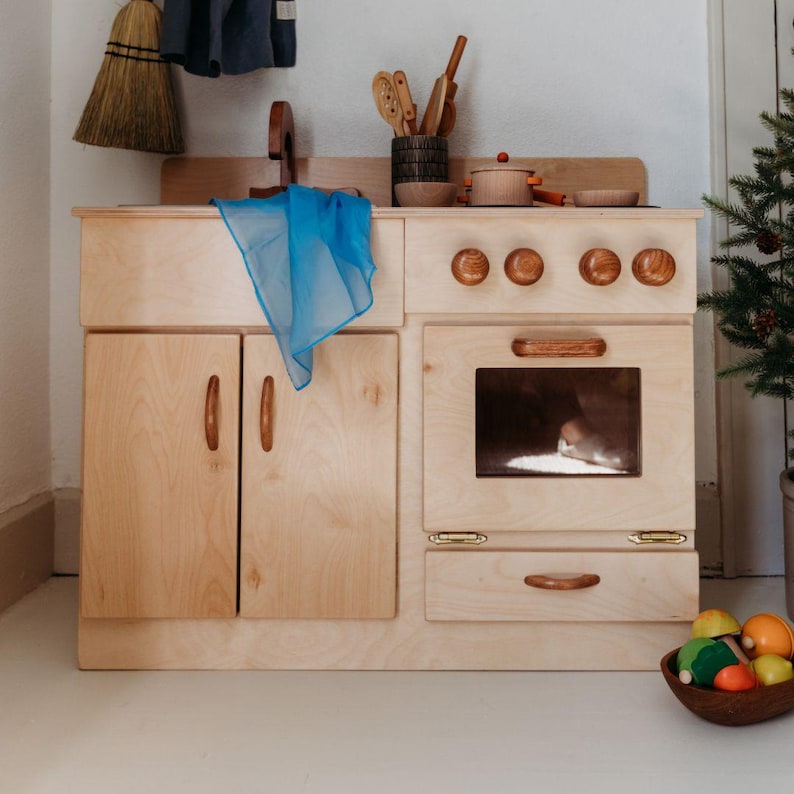
Budget does not need to feel scary. Some families buy a simple secondhand wooden unit and refresh it with safe paint, sturdy knobs, and a battery tea light for an oven glow. Others choose a new piece that matches their decor, maybe mushroom gray with sage accents, so the toy corner fits the room rather than shouting from it.
Then comes the parent benefit that nobody should feel guilty about: a well placed kitchen can occupy kids constructively while adults handle nearby tasks. It does not replace connection or supervision, but it can create a calmer rhythm. A parent folds towels while a child prepares pretend soup. Another parent answers one email while the “restaurant” serves invisible pancakes.
This helps during tense windows, especially before dinner or after preschool pickup. Children often need something active but contained, and parents need fewer conflicts over screens, couch jumping, or dumping every puzzle box at once. A mini cooking station gives hands a job and imagination a place to go.
Choose sturdy materials, wipeable surfaces, rounded edges, and low VOC finishes when possible. Anchor taller units to the wall, check loose knobs, and avoid deep grooves that trap crumbs and dust. The goal is not a picture perfect playroom. It is a family friendly corner that supports creativity, learning, and calmer everyday home activities. Which tiny recipe will the kids invent first!?