Picking the right baby bodysuit sounds simple until real life steps in. A sleepy newborn needs gentle layers that do not rub or bunch, while an older baby who kicks, rolls, and crawls needs room to move without loose fabric getting in the way. Parents often stand in front of tiny racks of baby clothes wondering which details matter most: fabric, sleeve length, closures, washability, or size labels that never seem quite identical from one brand to the next.
The smartest approach is to look past color and cute prints and focus on comfort, skin sensitivity, daily routines, and how a bodysuit performs after repeated washes. One family may need soft cotton pieces for long naps and frequent changes. Another may need sturdier options for daycare, stroller walks, and messy afternoons. That is where thoughtful baby outfit tips help, especially when the goal is a reliable, cozy, and practical everyday staple.





How to choose baby bodysuit fabrics for soft comfort and sensitive skin
The first thing to check is the feel of the fabric against the hand. If it feels rough, stiff, or overly synthetic on an adult palm, it will likely feel even less pleasant on delicate baby skin. For truly comfortable baby wear, parents usually do best with soft fabric options such as cotton, organic cotton, or cotton blends with a small amount of stretch for movement.
Breathability matters just as much as softness. Babies cannot regulate body temperature as efficiently as older children, so a bodysuit that traps too much heat may lead to fussiness, sweat, or damp skin around the neck and back. Lightweight, airy baby body suit materials help keep everyday wear more comfortable during naps, stroller rides, and indoor play.
Skin sensitivity is another big clue. Some little ones wear almost anything without complaint. Others react quickly with redness around the shoulders, thighs, or chest. When that happens, it helps to look for hypoallergenic textiles, flat seams, tag-free designs, and dyes that do not leave the fabric feeling harsh. A parent may notice that one bodysuit always leaves marks after an afternoon nap, while another stays smooth and gentle through bedtime. That is useful information, and it should guide future choices.
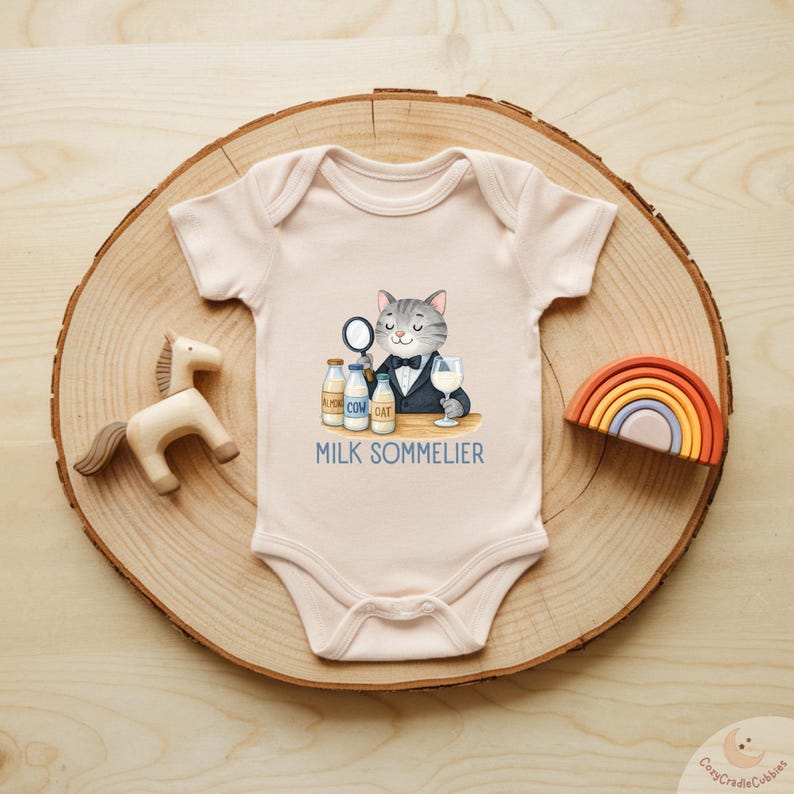
Milk Sommelier Baby Onesie® Brand
There is also a practical side to fabric choice. Softness should survive laundry. A bodysuit may feel lovely on day one, then lose shape after several washes if the knit is weak. Busy households need pieces that can handle milk dribbles, diaper leaks, spit up, and repeat cycles in the washing machine without twisting or shrinking too much. A dependable bodysuit looks good, yes, but more importantly it keeps its shape and comfort after hard use.
For quick shopping decisions, these fabric cues help:
- Cotton for softness, breathability, and everyday comfort
- Organic cotton for parents prioritizing gentle fibers and sensitive skin
- Stretch blends for active babies who roll and crawl often
- Lightweight knits for warm weather and layering
A newborn resting most of the day often does best in a silky soft bodysuit with minimal seams. A six or seven month old who has started scooting across the floor may need the same gentle feel, but with extra flexibility in the torso and leg openings. Small details count… and fabric is usually the first one worth getting right.
Short sleeve or long sleeve baby bodysuit options by season
Sleeve style changes how useful a bodysuit feels through the day. Short sleeve designs work well in warm homes, summer outings, and as base layers under pajamas or little pants. Long sleeve pieces add warmth in cooler weather and help during evening walks, especially when air conditioning or seasonal drafts make indoor temperatures unpredictable.
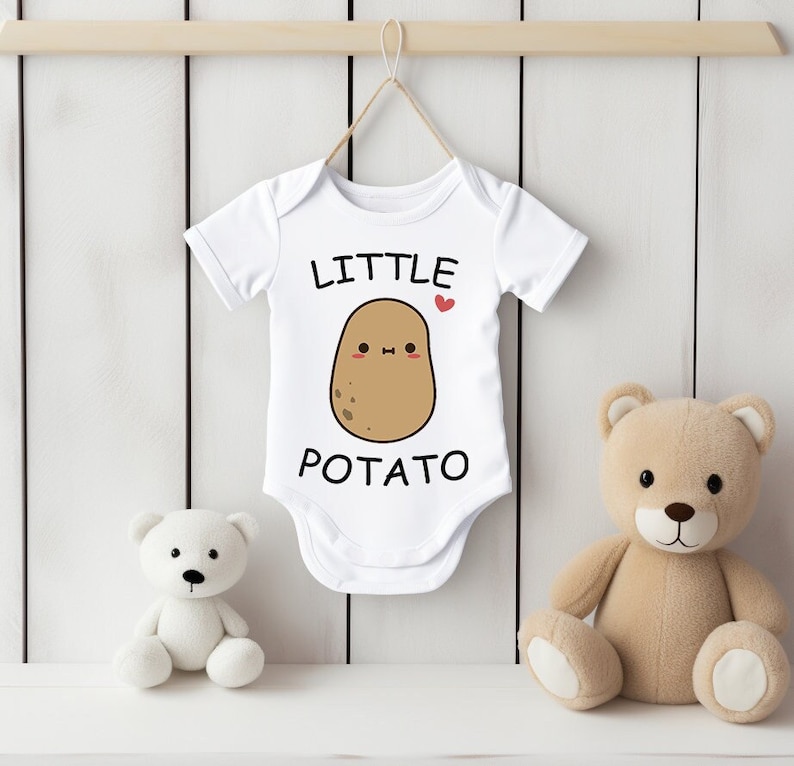
Little Potato Baby Bodysuit
Some parents keep both styles ready and dress in layers rather than relying on one thick garment. That tends to work well because it is easier to remove a cardigan or blanket than to deal with a baby who feels overheated and cranky. The best sleeve choice is not about fashion first. It is about comfort that matches the room, the season, and the baby in front of you.
Fabric and sleeves set the foundation, but fit decides whether a bodysuit feels cozy or annoying. That is where sizing deserves a closer look.
Baby bodysuit sizing tips to find the perfect fit without guesswork
Good bodysuit sizing starts with two simple checks: baby weight and baby length. Brand labels like 0 to 3 months or 3 to 6 months are helpful, but they are not precise enough on their own. One baby may have a longer torso. Another may have fuller thighs. Looking at actual measurements gives a clearer path to the perfect fit.
A well fitting bodysuit should sit close to the body without pulling across the chest or straining at the snaps. Around the legs, it should rest gently without leaving deep marks. A little room is fine. Too much extra fabric is less ideal because it can bunch under pants, ride up during naps, or shift awkwardly when the baby kicks.
Miso Cute Onesie®
Rapid growth changes the equation fast. Parents often buy for the present week, then discover the outfit feels snug after only a short stretch of time. Sizing one step ahead can help, but not if the garment hangs loosely or folds up around the neck. The goal is balance: enough margin for growth, enough structure for comfort. « Just a little room » is usually better than oversized.
A useful way to assess fit at home is to watch what the baby does while wearing it. During a diaper change, do the snaps close easily without tugging? During tummy time, does the fabric pull across the shoulders? During naps in the bassinet or crib, does the neckline stay flat? Those tiny observations often reveal more than the package label.
| Fit area | What to check | What feels right |
|---|---|---|
| Shoulders | Open neckline and seam placement | Sits flat, no rubbing, no slipping |
| Chest and torso | Stretch while baby kicks or stretches | Snug, but no pulling |
| Leg openings | Marks after wear | Gentle hold, no deep pressure lines |
| Snap panel | Ease of closing at the diaper area | Fast closure with light tension |
Think of two common moments. A tiny newborn who curls up most of the day needs a close fit that feels secure and does not swallow the body in excess cloth. A baby who has started crawling needs a bit more flex through the middle and hips, since constant movement tests every seam and opening. Fit is never only about size on paper. It shows up in movement, mood, and how easy the day feels.
Signs a baby bodysuit is too small or too loose
Too small is usually easy to spot. Snaps pull apart, shoulder seams creep upward, and red marks linger after the outfit comes off. Babies may also fuss more during dressing, which says plenty.
Too loose has its own problems. The neckline may gape, the torso may wrinkle under leggings, and the diaper area may sag. That can look harmless at first, yet it often leads to twisting, bunching, and extra adjusting throughout the day !
Once size feels sorted, the next question is daily practicality. Parents do not need clothes that only look good folded in a drawer.
Winnie Pooh Onesie®
Practical baby outfit tips for closures, diaper changes, and everyday wear
The best bodysuit earns its place during a rushed morning, a sleepy midnight change, or a stroller outing that runs longer than planned. Closures play a major role here. Snap fasteners at the bottom are a favorite for a reason: they support an easy diaper change without requiring the whole outfit to come off. That matters a lot when the room is cool or the baby is half asleep.
Envelope necklines or shoulder openings can help with dressing too. They make it easier to slide the garment on without too much pulling around the head. Some parents prefer simple snaps over small buttons, especially in low light, because quick hands win at 2 a.m. Buttons may look charming, but they often demand more patience than a tired parent has left.
Better Together Twins Baby Onesies®
Practicality also includes durability. A bodysuit in regular rotation should survive frequent washing, repeated snap use, and movement on mats, rugs, and car seat straps. Seams should stay intact. Fabric should not pill too quickly. Closures should line up after laundry rather than warp or twist. When shopping for newborn clothing or bigger infant basics, it helps to imagine the fifth wash, not just the first wear.
Observing the baby is still the most reliable guide. Some babies dislike anything tight on the wrists. Some get warm easily and settle better in short sleeves. Others seem happiest in stretchier pieces that let them roll and crawl freely. One family might notice their baby relaxes in a buttery soft cotton bodysuit after bath time, while another notices fewer complaints during play when the leg openings are cut a little wider. Those responses matter more than trends.
These everyday details often make shopping easier:
- Choose snaps that open quickly and close securely.
- Check whether the neckline makes dressing smoother.
- Favor fabrics that keep shape after repeated washing.
- Match sleeve length to season, room temperature, and layering needs.
- Watch how the baby moves, rests, and reacts while wearing it.
For many parents, the best choice is not the fanciest one in the drawer. It is the bodysuit that feels soft after laundry, fits well during a growth spurt, and makes diaper duty less dramatic. That kind of everyday ease is worth looking for.
Small clothing decisions can lighten the whole day. And when a baby looks settled, moves freely, and stays comfortable from nap time to snack time, that usually says the bodysuit was the right pick.
What fabric is best for a baby bodysuit?
Soft, breathable cotton is a strong everyday choice because it feels gentle on delicate skin and handles frequent wear well. Organic cotton and hypoallergenic fabrics can be especially helpful for babies with sensitive skin.
How tight should a baby bodysuit fit?
It should sit close to the body without pulling at the snaps, chest, or leg openings. A little room for movement and growth is helpful, but too much looseness can cause bunching and discomfort.
Are long sleeve or short sleeve bodysuits better?
Both can work well depending on season and indoor temperature. Short sleeve styles are useful in warm weather or for layering, while long sleeve options add comfort in cooler rooms and outdoor outings.
What closures make diaper changes easier?
Bottom snaps are usually the most practical because they allow fast diaper access without removing the whole outfit. Envelope necklines can also make dressing and undressing simpler.