A family screen time agreement can calm one of the most exhausting parenting loops: the daily debate over one more show, one more level, one more minute. Families often do not need harsher rules. They need clearer ones, written down, shared by everyone, and simple enough for a tired child to remember after school or during bedtime pushback. When children help shape the plan, they are far more likely to respect it, because the rule feels like a family promise instead of a surprise punishment.
That matters in ordinary moments that pile up fast, from snack time tablet requests to weekend gaming negotiations. Written expectations are linked with fewer daily arguments, and one widely shared estimate points to around 47% fewer conflicts when families stop deciding on the fly. The real win is not only quieter evenings. It is steadier screen time management, less confusion for adults, and a home rhythm that feels easier to protect. 😊


Build a family screen time agreement with kids, not just for kids
The strongest plans usually start in a calm moment, not halfway through a meltdown on the couch. A parent might notice that the hardest arguments happen right before dinner, or that a child asks for cartoons every morning while shoes are still missing and the school bag is nowhere in sight. That is the perfect clue. Instead of reacting again and again, the family can sit down and talk about what technology is doing well, where it is causing friction, and what everyone needs in order to make the day run better.
Children need a voice in this discussion because buy in grows from participation. A five year old may not write the rules, but that child can still answer simple questions such as “What do you like about screen time?” or “What feels hard when it is time to turn it off?” Older children can say more. They may admit that they hate sudden shutoffs, want to finish one episode, or feel upset when a sibling gets different access. Those details help parents design kids screen time rules that feel realistic rather than random.
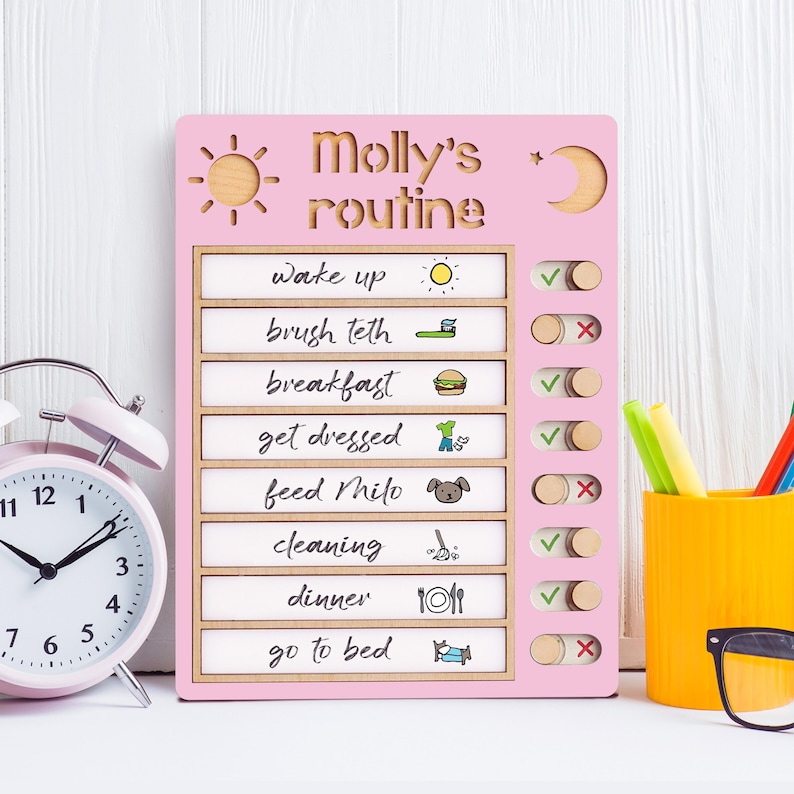
Customized Wooden Toddler Routine Chart, Visual Schedule for Kids, Daily Routine chart, Chore Chart for Kids, Homeschool Schedule
A useful family meeting keeps the tone warm and steady. The goal is not to interrogate anyone. The goal is to define what technology should look like in this house. Some families want screens mainly for learning during the week and entertainment on weekends. Others care most about protecting sleep, keeping meals device free, or making sure outdoor play still happens every day. A good family media plan reflects those values clearly.
Specificity matters more than strictness. Vague phrases such as “not too much” invite fresh arguments every afternoon. Clear rules cut down the negotiation. A child can understand “30 minutes after homework in the living room” far better than “we will see later.” The most helpful agreements usually answer four questions: when screens are allowed, how long they last, what content is approved, and where devices may be used. That simple structure gives shape to the whole plan.
Age also matters. A preschooler often needs short sessions, a visible timer, and adult support nearby. A six or seven year old can usually handle more choice, especially if the agreement spells out weekday use, weekend use, and bedtime cutoffs. Pediatric guidance still offers a helpful starting point: very limited use for children under two except video calls, around one hour of high quality content for ages two to five, and consistent boundaries for older kids that protect sleep, activity, and family connection.
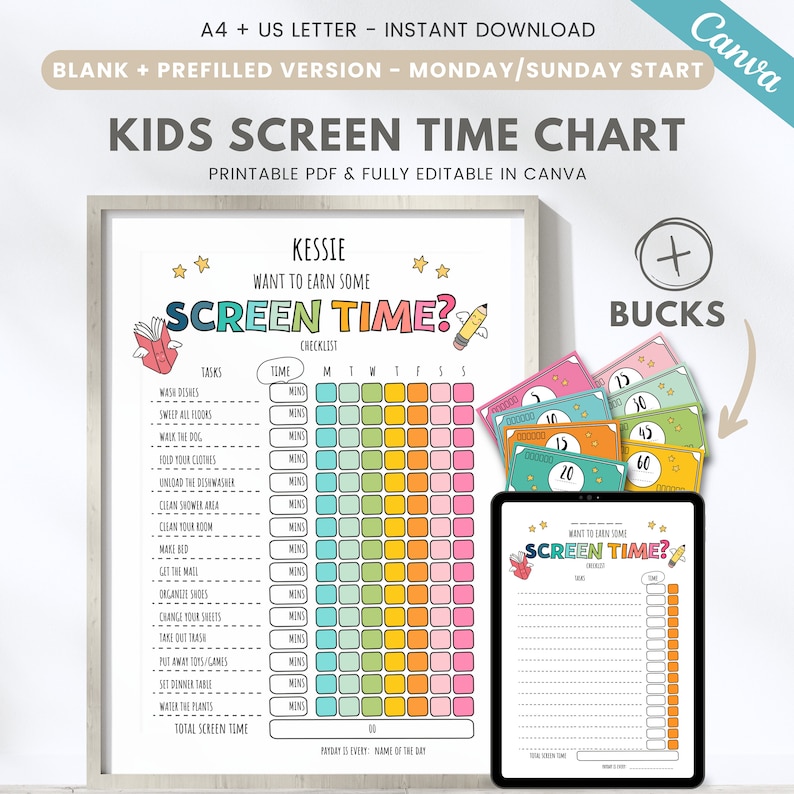
Editable screen time chart with reward bucks, kids chore chart, pretend money, screen time checklist, tv tokens, mom bucks, Canva template
There is one more piece that parents sometimes skip. Adults need to state the why in simple words. “These rules help us sleep, play, eat together, and enjoy screens without fights” lands much better than a speech about discipline. Children may still grumble. Of course they will… but clear family rules often lower anxiety because everyone knows what to expect.
How to make the rules visible and easy to follow every day
Once the conversation is done, the agreement should move out of everyone’s head and into the room. A poster on the fridge, a colorful chart near the kitchen table, or a one page printout in a shared area works well because children can see the routine instead of hearing a brand new lecture each day. The visual cue matters during tense moments. When a child protests, the parent can point to the family plan and stay calm rather than launching into a long defense.
A visible agreement also helps with consistency across caregivers. If one adult says yes after school and another says no before dinner, confusion grows fast. Written technology use guidelines reduce that wobble. Grandparents, babysitters, and co parents can all see the same expectations about device free meals, approved apps, or no screens in bedrooms. That shared language protects children from mixed messages and protects adults from constant renegotiation.
Editable Screen Time Template | Printable Kids Screen Time Chart | Digital Device Tracker for Children | Family Tech Rules Planner
For younger children, visual support can be wonderfully simple. A picture of breakfast, then a picture of one show, then shoes, then outdoor play. A timer with a bright countdown gives a child something concrete to watch. “When the timer rings, screen time is all done” is easier to follow than an adult calling out random warnings from another room. That tiny difference can reduce transition drama at bedtime or before preschool pickup.
Older children often do well with a more detailed setup. Parents might include school day limits, weekend limits, approved platforms, and one hour device free before sleep. If parental controls fit the child’s age, they can support the plan rather than replace it. That distinction matters. An app can block extra minutes, but it cannot teach self control by itself. The agreement still needs conversation, practice, and a regular check in so children understand why the rule exists.
One family with two children, ages four and seven, posted their plan in the hallway outside the kitchen. The younger child had pictures. The older child had words and check boxes. Both could see that Saturday movie night was special family time, while weekday screens happened only after responsibilities were finished. The chart did not make every transition magical ! But it removed the daily mystery, and that alone eased the pressure.
Editable Cellphone Contract for Kids, Kids Phone Agreement, Printable Kids Phone Rules, Digital Device Contract, Screen Time Rules for Kids
This is also the right place to add appealing alternatives. A rule feels less harsh when the next option is ready and inviting. Keep puzzles on a low shelf, art supplies in a basket, scooters by the door, or a simple list of family choices such as backyard play, Lego time, baking, reading corner, or a dance party in the living room. A good plan for digital detox for kids is not only about removing devices. It works best when something fun is waiting nearby.
Parents often notice that transitions improve when offline choices are visible before the screen goes dark. That small setup changes the mood from loss to direction.
Use fair screen time enforcement, flexible reviews, and strong parent modeling
Even a thoughtful plan needs follow through. This is where many families wobble, not because the rules are wrong, but because enforcement changes with adult stress, busy evenings, or guilt after a hard day. Children quickly spot inconsistency. If the timer matters on Monday but not on Thursday, they learn to test the edge every time. Calm, predictable screen time enforcement works better than dramatic speeches or sudden punishments.
The most effective consequences connect directly to the rule that was broken. If a child keeps watching after time is up, the next session can be shortened by the extra minutes used. If unapproved content was chosen, parents can temporarily narrow choices to a small approved list. If the problem is rude behavior during shutoff, a short pause from entertainment screens may be fair, paired with coaching on respectful language. The key is that consequences are decided in advance and used without anger.
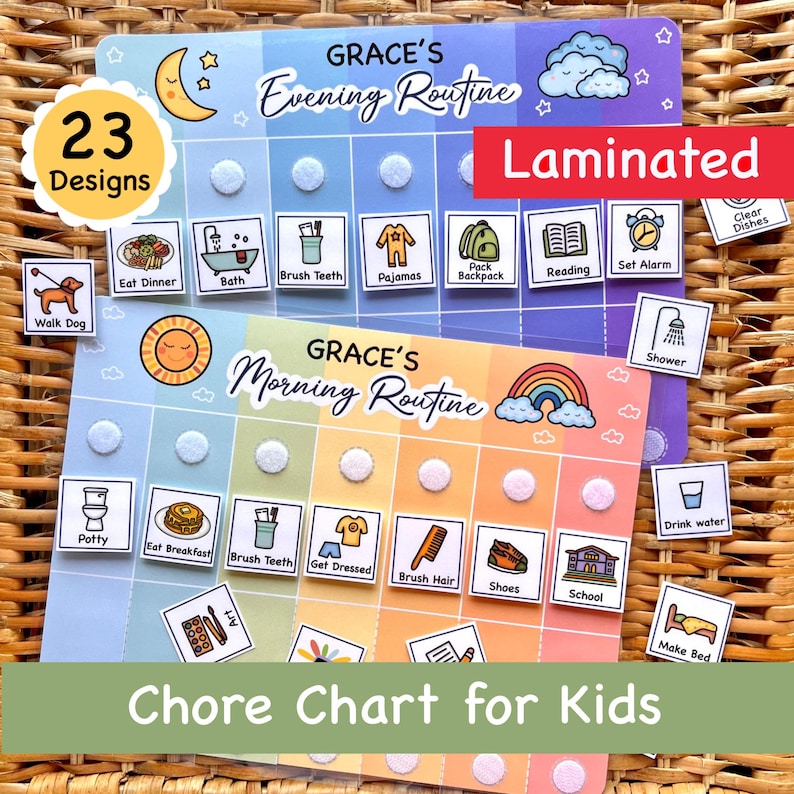
Morning, Afternoon & Evening Routine Chart, Planning Toddler Bedtime Routine, Weekly Visual Calendar, Chore Chart for Kids, Reward Chart
Language matters here too. A steady script helps. “I see the screen is still on. Our rule says it turns off when the timer rings.” Short. Clear. No debate club at 7:12 p.m. If a child argues that a friend has looser rules, the calm reply can stay the same each time: “Different families make different choices. These are our family rules.” Children may not love that answer, but repetition gives it strength.
Praise deserves a bigger role than many parents expect. When a child shuts off the tablet right away, shares the device kindly, or asks politely for a new app, notice it. A simple statement such as “You turned it off when the timer rang, that was responsible” helps children link effort with success. This supports autonomy, especially for younger kids who still need help with transitions and for older ones learning about child behavior and screens in a practical way.
Flexibility also belongs in the agreement. Life does not run on a perfect script. Sick days, travel, family celebrations, and school projects may call for adjusted screen time limits. The trick is to plan those exceptions openly, not invent them in the middle of a fight. “Travel days have different rules” or “Movie night is special family time” gives children a framework. It shows that the plan is sturdy, not rigid.
Regular review keeps the agreement current. Every three to six months, the family can ask what is working, what feels too hard, and whether developmental changes call for more independence. A six year old who has handled timers well for months may be ready to track a short session independently. A child who struggles after certain games may need a tighter content list. This kind of adjustment is part of healthy screen time management, not a sign that the plan failed.
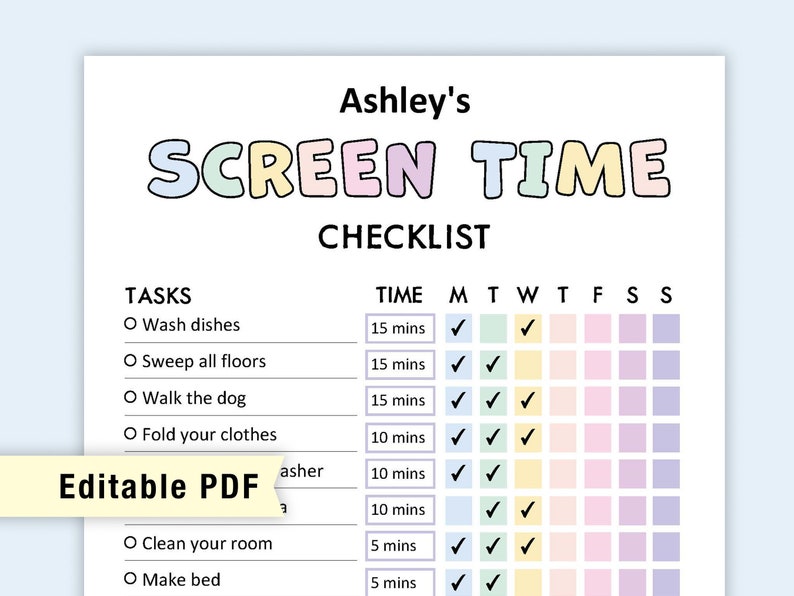
Editable Screen Time Chart Kids | Printable, Digital | Screen Time Chore Chart | Kids Chore Checklist | Chore List | Screen Time Tracker PDF
Finally, parents set the emotional weather around devices. If adults say “no phones at dinner” while scrolling through messages by the pasta bowl, children notice the mismatch instantly. Modeling does not require perfection. It requires honesty and effort. A family agreement works best when parents follow shared rules, put their own devices away during connection time, and show that offline life still matters, from board games to evening walks to silly living room fort building. That example is often the quiet force that makes the whole plan stick. 📱➡️🧩
Creating a calmer home with practical parenting tips and screen time limits
Many families start this process because technology has begun to crowd out the parts of childhood they want to protect. Sleep slips later. Mornings feel rushed. Siblings bicker over turns. Parents feel trapped between being too strict and too permissive. A written agreement gives structure to those messy pressure points. It offers practical parenting tips that can be repeated on an ordinary Tuesday, not just admired in theory.
The best sign that a plan is working is not silence or perfect compliance. It looks more ordinary than that. Fewer arguments before dinner. Less begging in the car. A child who knows the rule and reaches for markers after the timer rings. A parent who no longer has to improvise every decision under stress. That is the power of a clear, shared rhythm around devices.
And when the agreement includes family fun beyond screens, it starts to feel less like restriction and more like direction. Weekend bike rides, craft bins, kitchen helper jobs, library trips, sidewalk chalk, card games, or just ten unrushed minutes of rough and tumble play can make the whole household less screen fixated. Children are far more willing to leave a device when the next part of the day feels lively and connected.