It happens in ordinary moments. A child hears « five more minutes » and clings to the tablet like it holds the whole afternoon. A parent, already tired from school pickup, snack crumbs, and the bedtime clock creeping closer, feels the tension rise fast. Screen time is part of modern family life, yet that does not mean it has to run the mood of the home. Clear boundaries, steady communication, and practical routines can lower stress, protect connection, and make room for sleep, play, and real conversation.
Families often struggle not because screens exist, but because the rules feel fuzzy one day and strict the next. Kids notice that instantly. When digital limits shift with a parent’s energy level, every shutoff feels personal. The good news? With calmer scripts, better timing, and age-appropriate expectations, conflict resolution gets easier. The goal is not a perfect house with zero complaints. It is a home where technology use fits into daily life without swallowing it whole… and where parents stay in charge without sounding like a broken alarm.





Why Screen Time Boundaries Matter for Family Well-Being
Healthy limits matter because children do not just use screens for entertainment. Devices compete with sleep, movement, boredom, conversation, and those small family rituals that hold a day together. When a child scrolls right up to bedtime, many parents notice the same pattern: slower wind down, more stalling, more irritability the next morning. That is not dramatic parenting talk. It is the lived reality of many homes.
Strong family rules around devices support mental and emotional balance. A younger child who jumps from cartoon to game to video clip may look busy, but still struggles with frustration once the screen goes dark. An older child may insist the phone helps them relax, yet still end up snappy, distracted, or pulled away from real rest. Limits help protect attention, mood, and the ability to be present with other people.
Screen Free Summer Printable for Kids Ages 4-8 | Outdoor Activity Cards | Boredom Buster Kit | Summer Activity Pack for Moms
There is also the relationship side. Constant bargaining around a tablet can quietly wear down trust. Parents start sounding like referees. Children start testing every edge. That cycle feels exhausting ! And when it repeats every day, the device stops feeling like a tool and starts feeling like the boss of the house.
Age matters here. For babies and toddlers, delaying screen habits can protect time for sensory play, movement, face reading, language, and plain old curiosity. For preschoolers, short and intentional use works better than endless background media. For school age children and tweens, the focus often shifts from a fixed number of minutes to a bigger question: does media use interfere with sleep, school, exercise, friendships, chores, and calm family time?
Screen Time Rules & Rewards System for Kids | No More Battles
Parents also need to think about what children miss when every bored minute gets filled. Boredom is not an emergency. It often leads to blanket forts, paper airplanes, sticker messes, and wild pretend games about veterinarians or astronauts (with one sock missing, naturally). Those moments build patience and imagination in visible ways.
A simple table can help clarify what balanced expectations may look like at home.
| Age group 👧👦 | Helpful focus 📱 | What to protect most 🌙🏃📚 |
|---|---|---|
| Under 2 | Very limited use, mainly video chats with support | Sleep, sensory play, face to face interaction |
| Ages 2 to 5 | Short, high quality viewing with adult guidance | Active play, language, routines |
| Ages 6 to 12 | Clear schedule and content rules | Homework, exercise, family connection, bedtime |
| Teens | Shared agreements and self management practice | Sleep hygiene, social balance, offline responsibility |
When parents see limits as support rather than punishment, the tone changes. The rule is not « because screens are bad ». The rule is « this helps everyone feel better, sleep better, and get through the day with less friction ». That small shift can soften a lot of resistance before the next power struggle even starts.
How to Set Screen Limits Without Constant Conflict in Daily Life
The biggest trigger for arguments is uncertainty. If one night the tablet stays on through dinner and the next night it gets shut off after ten minutes, kids learn to negotiate every single time. Clear expectations cut down the guesswork. They also protect parents from making tired decisions in the heat of the moment.
Start before the screen turns on. Say what the plan is, how long it lasts, and what happens next. A child handles « twenty minutes, then bath » much better than an abrupt « enough, give it here ». Predictability feels fair. Fairness reduces pushback.
Toddler Screen Time Guide: Low-Stimulating Kids Shows Flashcards (Digital Download)
Keep the rules simple and visible. Some homes use a fridge note. Others say the same script every day. What matters is consistency, not fancy systems.
Practical family rules that reduce daily battles
Short rules work best because children can remember them and parents can repeat them calmly. A helpful set might include where devices can be used, when they are off limits, and what needs to happen before any entertainment media starts. This supports time management and lowers the emotional charge around enforcement.
- ⏰ Screens happen after homework, basic chores, and outdoor time
- 🍽️ No devices during meals or family conversations
- 🛏️ No screens in bedrooms at night
- 🔔 A reminder comes five minutes before shutoff
- 📚 If the plan changes, adults explain why clearly and briefly
Notice what is missing from that list: yelling, bargaining, and surprise punishments. When rules are established early, child discipline feels less like a showdown and more like following the map. That matters a lot on busy weekdays.
Explaining the reason behind the rule also helps. Children do not need a lecture. They do need honesty. A parent might say, “Screens are off after dinner because brains and bodies need a slower pace before bed.” That sentence is short, respectful, and much easier to accept than « because I said so ».
Another key move is avoiding the habit of using screen access as the prize for good behavior or the threat for bad behavior. That can make devices feel extra powerful. In many homes, a neutral approach works better. Media is simply one part of the routine, with clear start and stop points, not a shiny trophy handed out after every struggle.
nteractive Toddler Screen Time TV Choice Flash Cards | Low-Stimulating, Educational, Parent-Approved, Kid & Preschool Boredom Buster, Media
Parents should also model the same habits. If adults scroll through dinner while children hear speeches about moderation, the rule will feel hollow. Put the phone down during meals. Leave it across the room during bedtime stories. Those visible choices strengthen credibility more than any long talk ever could.
A common scene at the playground proves this point. One family gives a ten minute warning, another reminder at two minutes, then follows through. The child still groans, maybe even flops dramatically onto the bench, but the limit stays in place. Another family negotiates three extra rounds, then five more minutes, then one more video. Which child is more likely to test the line tomorrow? The answer is usually obvious.
Steady routines do not erase every complaint. They do reduce the heat around the complaint. That is a major parenting win.
For more ideas, it helps to watch how other families build calm routines around devices and transitions.
Calm Communication, Flexibility, and Screen Free Alternatives That Work
Even the best plan gets tested. A child may protest because a game is mid level. A tween may argue that all friends stay online later. A parent may feel tempted to give in during a long workday. This is where tone matters as much as the rule. Calm, respectful communication helps children feel heard without handing over control.
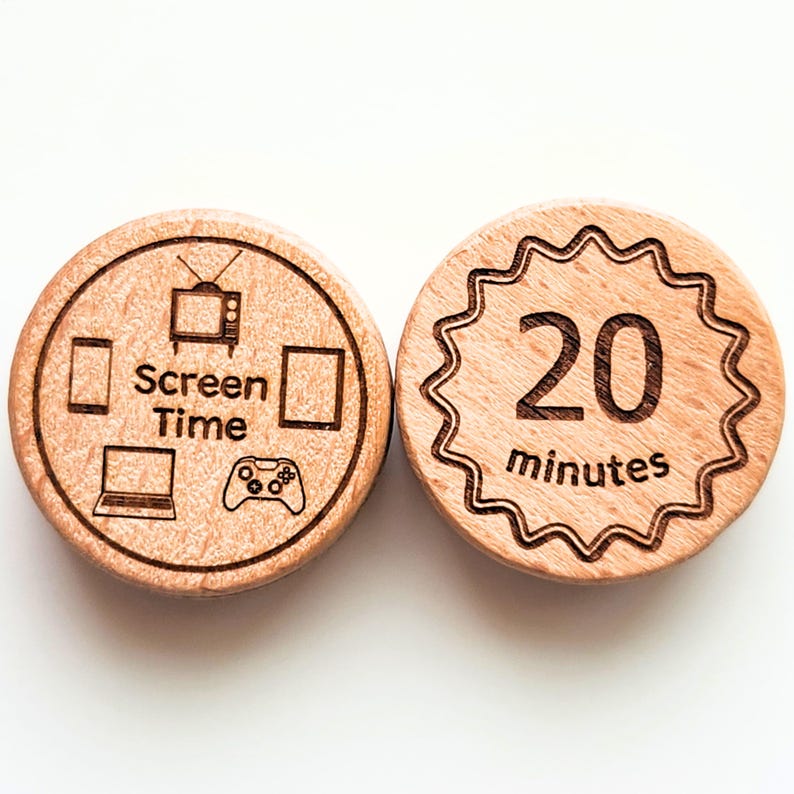
Game Controller Screen Time Tokens: Laser Cut Wood, Kids Reward System
Try collaborative language. « Let’s figure out a plan that protects bedtime and still gives you time to watch your show » lands differently from a sharp command. Listening matters too. Sometimes resistance points to something real, such as needing a longer warning, wanting a specific end point, or feeling left out socially. Hearing that concern does not mean surrendering the limit. It means solving the problem with the child, not against them.
Flexibility belongs in the system, not in random exceptions. Family movie night, a rainy sick day, or travel may justify a temporary change. Say so clearly. Then return to the usual routine the next day. Children cope better with exceptions when they know the rule still exists.
Screen free replacements that lower temptation
If the device is the only fun thing in sight, of course children push for it. Offer alternatives with real appeal. They do not need to be expensive or elaborate.
- 🎨 A craft bin with paper, stickers, tape, and washable markers
- ⚽ A quick backyard game or a walk around the block
- 🧩 Puzzles, magnetic tiles, or building sets on a low shelf
- 📖 Cozy reading corners with rotating library books
- 🍓 Simple kitchen jobs during snack time, like slicing strawberries with help
- 🎭 Pretend play baskets with costumes, toy animals, or doctor kits
One useful habit is a regular check in every few weeks. Ask what is working, what feels hard, and what needs adjusting for age or school demands. A six year old and an eleven year old will not need the same plan. Maturity, temperament, homework load, and sleep sensitivity all matter.
Patience matters too. New rules often spark louder protests before life gets easier. That does not mean the plan failed. It means the family is changing a pattern, and patterns take time to loosen. Hold steady. Stay kind. Repeat the boundary without drama. Over time, many children stop fighting every shutoff because the line no longer feels up for debate.
TV Screen Time Coins and Custom Chore Chart Kit for Kids
One honest note: no system works perfectly in every home, and no plan eliminates pushback in two days. Another limit worth admitting is that a rule designed for a younger sibling may not fit an older one, especially once school messaging, group chats, or shared gaming enter the picture. Parents can still lead with clarity while adjusting expectations thoughtfully.
The most effective parenting around screens is rarely the loudest. It is usually the calmest, the clearest, and the most repeatable. Less drama. More rhythm. Better connection.
Families often find it helpful to borrow practical scripts and transition ideas from child development educators and daily routine coaches.
What is the best way to start screen limits if there are already daily fights?
Start with one or two clear rules, not a total overhaul. Pick the moments that matter most, such as meals and bedtime, explain the reason briefly, and follow through consistently for at least a few weeks.
Should parents negotiate screen time with children?
For younger children, parents should set the structure and offer limited choices inside it. For older kids and teens, shared discussions often help because involvement increases buy in and responsibility.
Is it a bad idea to use screens as rewards?
It often creates more tension because devices start to feel more powerful and emotionally charged. A neutral routine usually works better than tying media access to every success or mistake.
How can families stay consistent during busy or unusual days?
Use a basic default plan, name exceptions clearly, and return to the usual rule right away. Children handle flexibility better when it is explained instead of feeling random.